OUR SECOND SERVICE
Roof replacement in Columbus, recommended only when repair stops making sense
Chips: End-of-life roofs · Widespread storm damage · Layered old roofs · Granule loss
This page exists because some roofs are finished, and pretending otherwise costs homeowners more than replacing them. It is written by a repair-first company, which changes its tone: replacement here is the second opinion made permanent, the thing we recommend once an honest read of the slopes says the roof you have cannot be honestly patched anymore. Start with a free, hassle-free, no-obligation inspection, and let the evidence on your own roof make the case either way.
When repair stops making sense
Mike Delaney's founding rule, repair until it stops making sense, needs its second half spelled out. Replacement becomes the honest conversation when the failures stop being local:
- The wear is everywhere. Granules are washing off across all slopes,
shingles are curling or cracking in field after field, and each season's repair is a different corner of the same decline.
- The leaks keep moving. You fix the chimney flashing and the valley
starts. You fix the valley and a boot goes. A roof that leaks in rotation is telling you the system, not a detail, is done.
- The math has quietly flipped. When a year's repairs approach a real
share of a replacement's price, and the roof underneath them is still twenty five years old, the repairs are renting time at a rising rate.
- A storm finished an old argument. Hail or wind damage spread across
every slope of an already tired roof can be the event that ends the repair-versus-replace debate. Get it documented in photos before anyone, including your insurer, draws a conclusion.
None of these is settled by age alone, from the ground, or over the phone. They are settled by what the slopes and the attic actually show.
The repair-versus-replace conversation, run honestly
Ryan took this company over in 2016 with his father's rule in one hand and a notebook in the other, and replacement calls are where the two meet. You will hear the widespread wear described slope by slope, not waved at as an adjective. You will hear the repair price for the immediate problem alongside the replacement discussion wherever a repair exists, because a homeowner who only hears one number has not been given a decision, only a direction. And if your roof has five good years left, that is the recommendation you will get, with the small repair done, so the eventual replacement conversation begins from what was found this time instead of a fresh sales call.
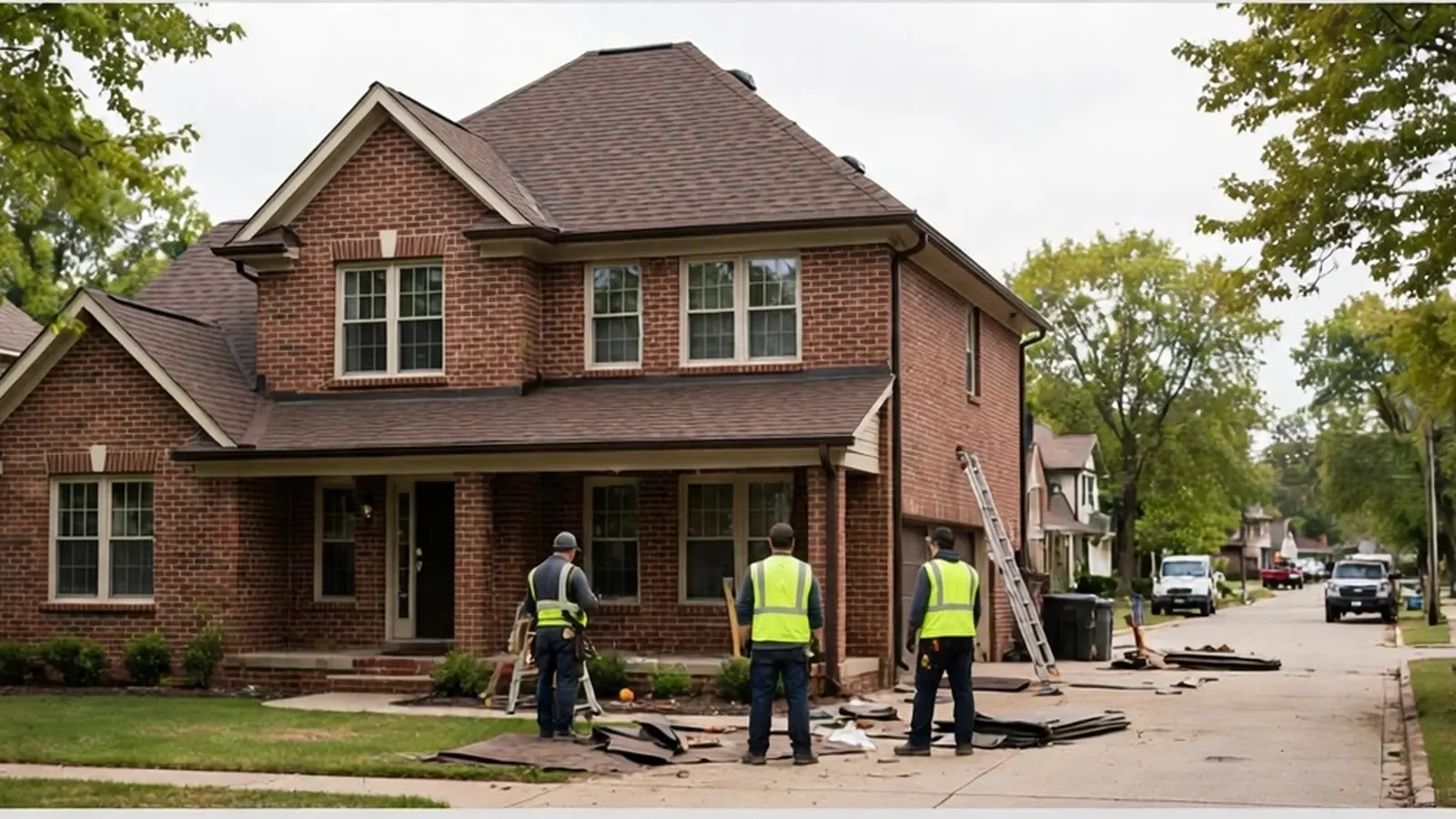
What roof replacement typically runs in Columbus
Use this table to budget. It is not a quote, and it cannot see your roof from here. These are planning numbers, drawn from published Columbus cost guides checked in November 2026, and the guides themselves spread widely, which is why the bands here stay wide.
| Item | Typical range | Notes |
|---|---|---|
| Full replacement, architectural asphalt, typical home | $7,500 to $13,000 | Columbus guides cluster in and around this band |
| Smaller or simpler roofs | from about $5,700 | Low end of published local guides |
| Larger, steeper, or complex roofs | $13,000 and up | Pre-war and multi-plane roofs live here |
| Premium materials | above the asphalt bands | Metal and designer shingles price separately |
Why the ranges are wide: a roof is priced by measured area, pitch, layers coming off, decking condition found underneath, and material chosen. Two houses on the same Powell street can differ by thousands because one roof is a simple gable and the other is a cut-up plan of hips and valleys. Ask any company quoting yours how the area was measured and what assumptions about the decking are inside the number.
What shapes a Columbus replacement price
Size and shape first. Roof area is not house area: pitch multiplies it, and hips, valleys, and dormers add labor at every intersection.
What comes off. An old roof's tear-off, and what the decking looks like once it is bare, is the great unknown inside every replacement number. Columbus's older stock can hide tired decking that no inspection from above could certify. Ask how decking surprises are handled and priced before work begins, so a discovery does not become a dispute.
The code layer. Ohio's residential code calls for ice and water shield at eaves and valleys over conditioned space, which matters in a county that counts dozens of freeze and thaw swings in a winter. Ask what is going on at your eaves and valleys and why; the answer tells you a lot about the company.
The permit and the paperwork. Columbus replacement work runs through City of Columbus Building and Zoning Services for homes inside the city, and through the relevant suburb's process elsewhere in the metro. Ask whoever quotes you which permit your address needs and who pulls it.
Why this crew, for this job
We would rather have repaired it
That is not a slogan; it is the business model the founder chose in 1990 and the son kept in 2016. A replacement recommended by a company that profits most from repairs carries a different weight than the same recommendation from a replacement-only sales operation.
Both numbers, one conversation
Where a repair exists, you hear it next to the replacement price, with the reasoning said out loud. A close call should be your call, made with the evidence in front of you.
Your roof's history walks in with you
If Olentangy has inspected or repaired your roof before, ask what those visits found: the replacement conversation should start from your roof's traced history, not from a stranger's first impression of your shingles.
The roof you have gets its hearing first
Ask us to argue for the repair. If the argument holds, you get a repair and a few more years. If it collapses under its own record, you will know replacement is not being sold to you; it is being shown to you.
How a replacement call goes
- You start with the inspection. Call for same-day help reaches Tessa, and so does the estimate form. The roof and the attic both get read, and the traced path gets explained before any numbers.
- The verdict conversation. Repair, replace, or repair now and plan, with the evidence and both prices where both exist.
- You decide on your own clock. A roof decision made at the kitchen table over a few evenings ages better than one made on a ladder's timetable. Sit with the findings.
- Ask for the dates. What was found before, during, and after the work, with dates attached, so the new roof starts its life with a birthday you can prove.
Replacement country: the aging suburbs
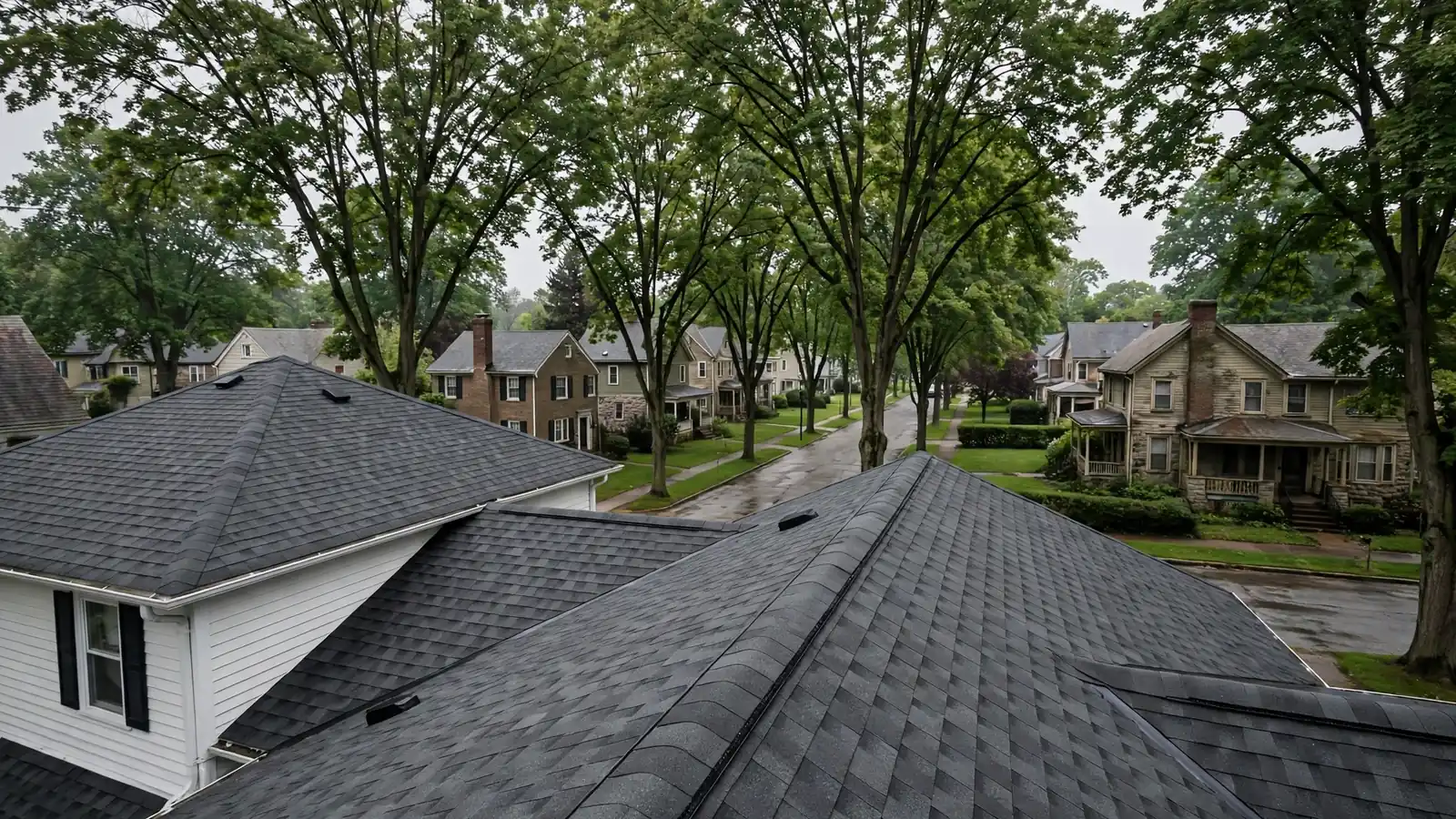
Columbus's replacement wave has an address pattern. The suburbs that built out fast in the late 1990s and early 2000s, Powell and the Olentangy corridor, Hilliard, much of Westerville, the newer arcs of Dublin, Pickerington, and Grove City, are arriving at the end of their first roofs in the same few years, because they were all installed in the same few years. Drive those streets and count the dump trailers: it is the sound of a building wave reaching its roof line. Meanwhile the pre-war core replaces on a different rhythm, one steep, complicated roof at a time, each with its own flashing history. Wherever your house sits in that picture, the question is the same and the method is the same: findings first, verdict second. Town by town detail is on the service areas page.
Replacement questions
My roof is eighteen years old and has never leaked. Am I due?
Not automatically. No leak is information, not an accident of luck you should rush to correct. What matters is condition: granule coverage, tab flexibility, flashing health, and what the attic shows. Get the inspection, read the findings, and let a sound eighteen year old roof keep its job.
A company told me my roof has storm damage and needs replacing. How do I check that?
Ask for the findings, slope by slope, and ask which marks are storm damage and which are age. The two look different up close and get treated differently by insurers. A second inspection, from a company that did not knock on your door, is money well spent on a claim this size; ours starts free, hassle-free, and no-obligation.
Should I repair now and replace in a few years, or replace now?
Price both, with dates attached. A sound repair that buys three to five years on a roof with real life left is often the right sequencing. A repair that buys one winter on a roof that is done buys nothing at all. The findings and the two numbers, side by side, usually make the answer obvious.
What should be in a replacement quote before I compare it to another?
Measured roof area, material named specifically, what happens at eaves and valleys, how tear-off and disposal are handled, how decking repairs are priced if found, and which permit your address requires. Quotes missing those lines are not cheaper; they are vaguer, and vague gets expensive at the tear-off.
Does a new roof change what my house is worth?
A roof at the end of its life is one of the first things a buyer's inspection flags, and a documented new roof, its dates and paperwork kept together, removes that flag cleanly. What it adds in dollars varies by house and market; what it removes in friction, when you go to sell, is easier to promise yourself.
Wondering whether your roof is a repair or a replacement? Call for same-day help or start with the free inspection, and decide from the findings on your own roof.