SECOND-GENERATION ROOFING: COLUMBUS, OHIO
A leak over Columbus? Ask where the water got in.
A stain is spreading across a bedroom ceiling, or shingles are scattered on the lawn after last night's wind, and from the driveway the roof still looks fine. That gap, between what a roof shows from the ground and what it is actually doing, is where bad decisions get made. Olentangy Roofing is a second-generation Columbus crew built to close it: repairs first, diagnoses traced back to where the water got in and explained in plain words, and a free, hassle-free, no-obligation inspection to start. Two generations over Columbus roofs, one habit added by the second: no price talk until the water's path is accounted for.
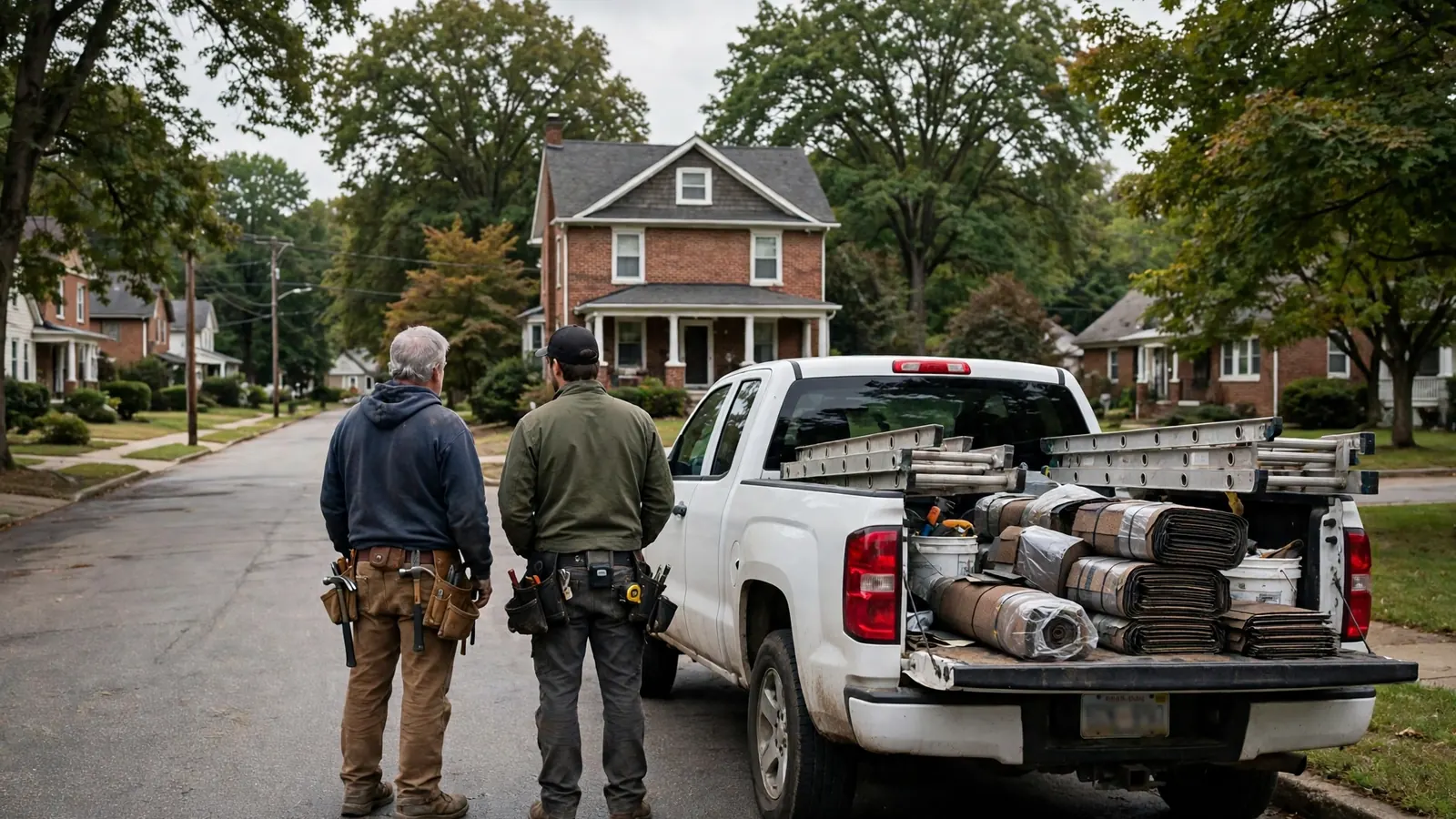
The stain is the last stop, not the first
Water that shows up on a ceiling has usually been traveling. It gets in at a cracked vent boot, a lifted shingle, or a flashing seam upslope, runs along the decking or a rafter, and only then drops where you can see it. Chasing the stain instead of the entry point is how a roof gets patched three times and leaks a fourth. When you call, Tessa books the inspection and most urgent leak calls get a same-day response, most days. The diagnosis that comes back to you leads with the water's path, traced from the stain back to the entry point, because a repair aimed at where the water got in beats one aimed at where it happened to drip, every time.
New here? Start with the free inspection. It costs nothing and commits you to nothing. If water is coming in right now, call, and say so in the first sentence. An active leak rearranges the day.
Two generations, one rule
Mike Delaney started this work in 1990, out of a rented garage bay in Clintonville, with a paper calendar and a rule he would not bend: a roof gets repaired until repairing it stops making sense, and then you say so. His son Ryan carried bundles up ladders through his teens, joined the crew full time in 2009, and took over in 2016. Ryan rebuilt the office around a simple idea his father approved of the first time he saw it work: show the homeowner the traced path, entry point and all, and let the findings carry the conversation. The full story is on the about page.
Roof Repair
Leaks traced to their actual entry point, missing shingles, flashing failures, vent boots, and storm damage, diagnosed by tracing each leak to its entry point.
Learn moreRoof Replacement
End-of-life roofs, widespread storm damage, and roofs where repair has stopped making sense, decided from the written record, slope by slope.
Learn more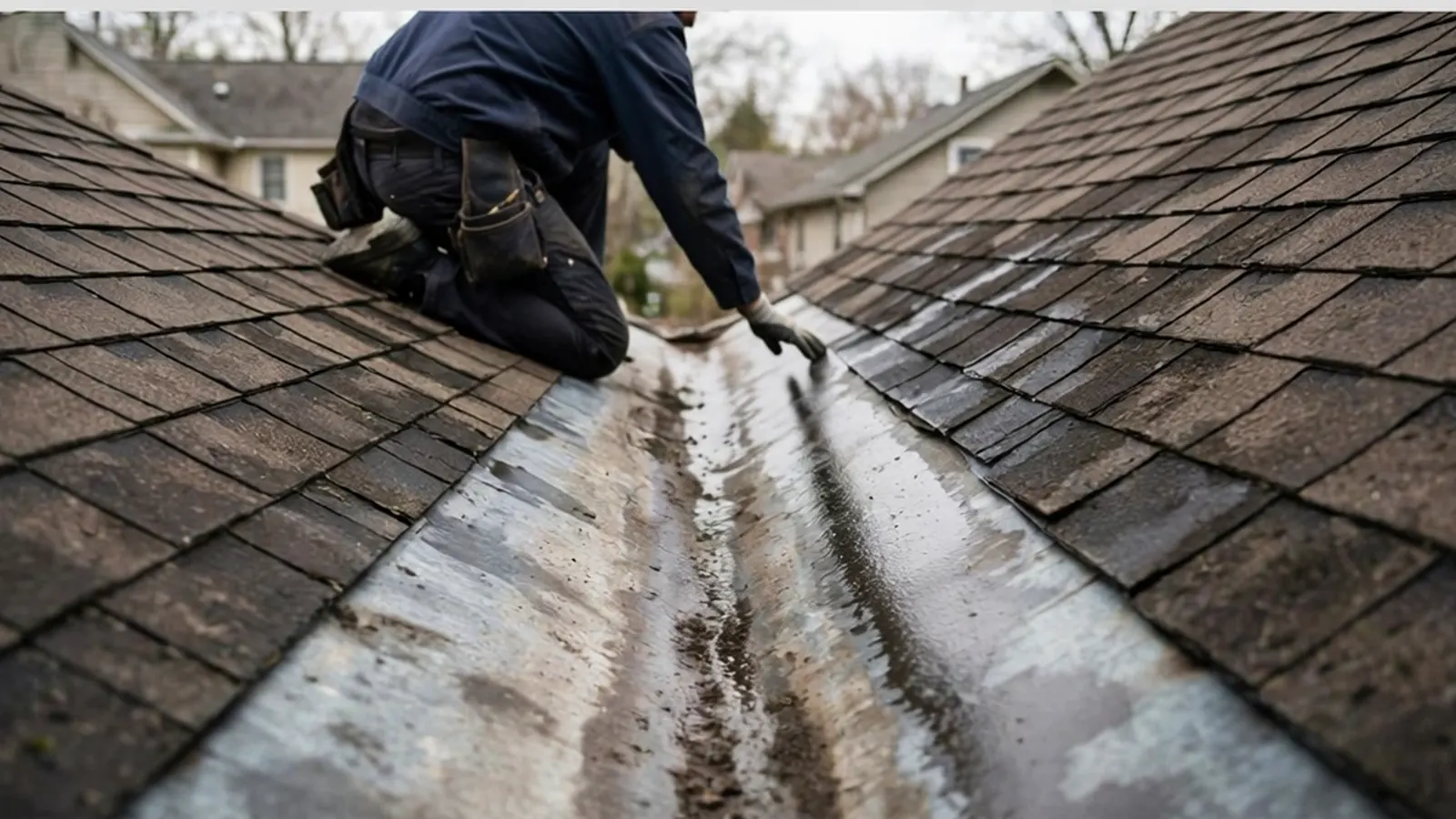
The river runs through the service area
The Olentangy comes down from Delaware County, through Worthington and Clintonville and past the Ohio State campus, and meets the Scioto downtown, and the suburbs along that corridor are this crew's home ground. Around it, the map fills in the way Columbus actually grew: Dublin and Powell on the northwest, Westerville and Gahanna on the northeast, the first-ring streets of Upper Arlington, Grandview Heights, and Whitehall, and the growth arcs through Hilliard, Grove City, Pickerington, and Canal Winchester, out to Delaware, Marysville, Lancaster, and Newark at the edges. One metro, worked end to end, by people who can tell you which decade built your street. The full list is on the service areas page.
Roofs in Columbus homes
Central Ohio is hard on a roof in a specific way. Franklin County swings above and below freezing dozens of times each winter, and every thaw lets water into small gaps at flashing and shingle edges that every freeze then widens. Snow melts off a warm attic, refreezes at the cold eave, and builds an ice dam that backs water up under the shingles. Then the calendar flips: spring and early summer bring the hail and wind season, when shingles get bruised where no hole ever shows from the ground, and summer humidity paints dark algae streaks down the shaded north slopes.
Layer the housing stock on top of that weather and the repair map draws itself. The pre-war streets near German Village and Olde Towne East carry old, steep roofs with decades of flashing history. The suburbs that built out in the late 1990s, Powell, Hilliard, big parts of Westerville and the Olentangy corridor, are reaching the end of their first roofs all at once, street after street. And around the University District, budget roofs put on fast for rental houses are aging on a shorter clock. Tell us your neighborhood and roughly when the house went up, and the likely story of your roof is already half told.
Why homeowners call Olentangy
Ask where the water got in
Every diagnosis here is a traced path: the cracked boot, the lifted course, the valley that is actually letting the water in, followed backward from the stain to where it got in. Keep the habit with any roofer you ever hire. A company that can account for the water, entry point and all, has a much harder time inventing a problem somewhere else.
Repairs first, by inheritance
The family's founding rule still runs the schedule: fix the roof you have until fixing it stops making sense. Replacement is a real service here, and it gets recommended when the roof is honestly finished, not because it is the larger job.
Traced, not remembered
Call back in two winters about a different corner of the same roof, and you can ask what the last tracing found, slope by slope, instead of starting the story over from a stranger's memory of your street.
One metro, known street by street
There is no out-of-state storm chasing in this company's history and none in its plans. Columbus and its suburbs are the whole map, which is how the crew knows that a Clintonville roof and a Powell roof of the same age are aging for different reasons.
Questions we hear every week
The stain is in the bedroom. Is the leak right above it?
Usually not. Water enters upslope, at flashing, a vent, or a damaged course, then travels along the decking before it drops. That is why a diagnosis starts in the attic and on the roof, not at the stain, and why the entry point matters more than the puddle.
How much does a roof repair run in Columbus?
Plan on ranges until someone has been up there. Around Columbus, a minor shingle repair typically runs $300 to $650, leak tracing and repair typically runs $360 to $1,550, and most repairs land between $300 and $1,600. Your number comes from what the tracing found on your roof, and from its pitch, not from a table.
A storm came through last night. What should I do first?
Photograph everything from the ground: shingles in the yard, the ceiling if it is leaking, the date on every picture. Then get an inspection booked. Hail bruises and wind creases often leave nothing you can see from the driveway, and a dated photo record is the most useful thing you can hand anyone, including your insurer.
What does the inspection cost?
Nothing. The inspection is free, hassle-free, and comes with no obligation.
My roof is twenty years old. Repair or replace?
That is the exact call this company was founded to make carefully. Age alone does not settle it: a sound twenty year old roof with one failed flashing deserves a repair, and a fifteen year old roof shedding granules across every slope may not. The attic and the traced path tell the story, and both prices deserve a hearing before you decide.
What happens when you call
First, we listen for the traveling clues: where the water shows, when it shows, what the last storm did. Tessa connects you with a local pro who can take the job. When the pro has been up top, ask where the water got in before you approve anything, and ask which slope and which detail is actually letting it in.
Two more questions worth asking whoever you hire: what did the attic side show, and what does this repair not fix? The first catches the leaks that have not stained anything yet. The second keeps a small job's limits honest, so next winter's drip does not arrive as a surprise.
If a bigger problem turns up once work starts, ask to have it shown and explained, and get its price before it joins the job. No charge reaches your bill that you did not say yes to first.
Get the water stopped
Call now and talk to Tessa in Clintonville, or send the estimate form and hear back with a time window.