OUR MAIN SERVICE
Roof repair in Columbus, decided by the water's path, not guesses
Chips: Active leaks · Missing shingles · Flashing failures · Vent boots · Storm damage
A roof rarely fails all at once. It fails at one detail, a boot, a seam, a corner of a valley, and then it spends months quietly letting the weather into your attic while the ceiling downstairs stays innocent. Olentangy Roofing is a second-generation, repair-first Columbus crew. Call, and Tessa will get the story of what your roof is doing; most urgent leak calls get a same-day response, most days. The diagnosis you get back leads with the traced path of the water, and it starts from a free, no-obligation inspection.
The failures we see every week
A leak that will not say where it lives
The ceiling stain is where the water finished its trip, not where it started. It entered upslope, at a nail hole, a cracked boot, or a flashing edge, and traveled along wood until gravity picked a spot. This is the signature Columbus repair: freeze and thaw work water into small gaps all winter, and the leak announces itself in a spring rain, ten feet from the hole that caused it. Repairing the stain's coordinates is how roofs get patched repeatedly and never fixed.
Shingles missing, lifted, or creased
Wind works a roof course by course. A gust gets under a tab whose seal has aged out, lifts it, creases it, and leaves it lying back down looking innocent from the street. The next hard rain drives water under it. After any strong wind through Franklin County, the honest check is a hand on the shingle up top, not a glance from the lawn: creased shingles are nearly invisible from the ground and obvious at arm's length.
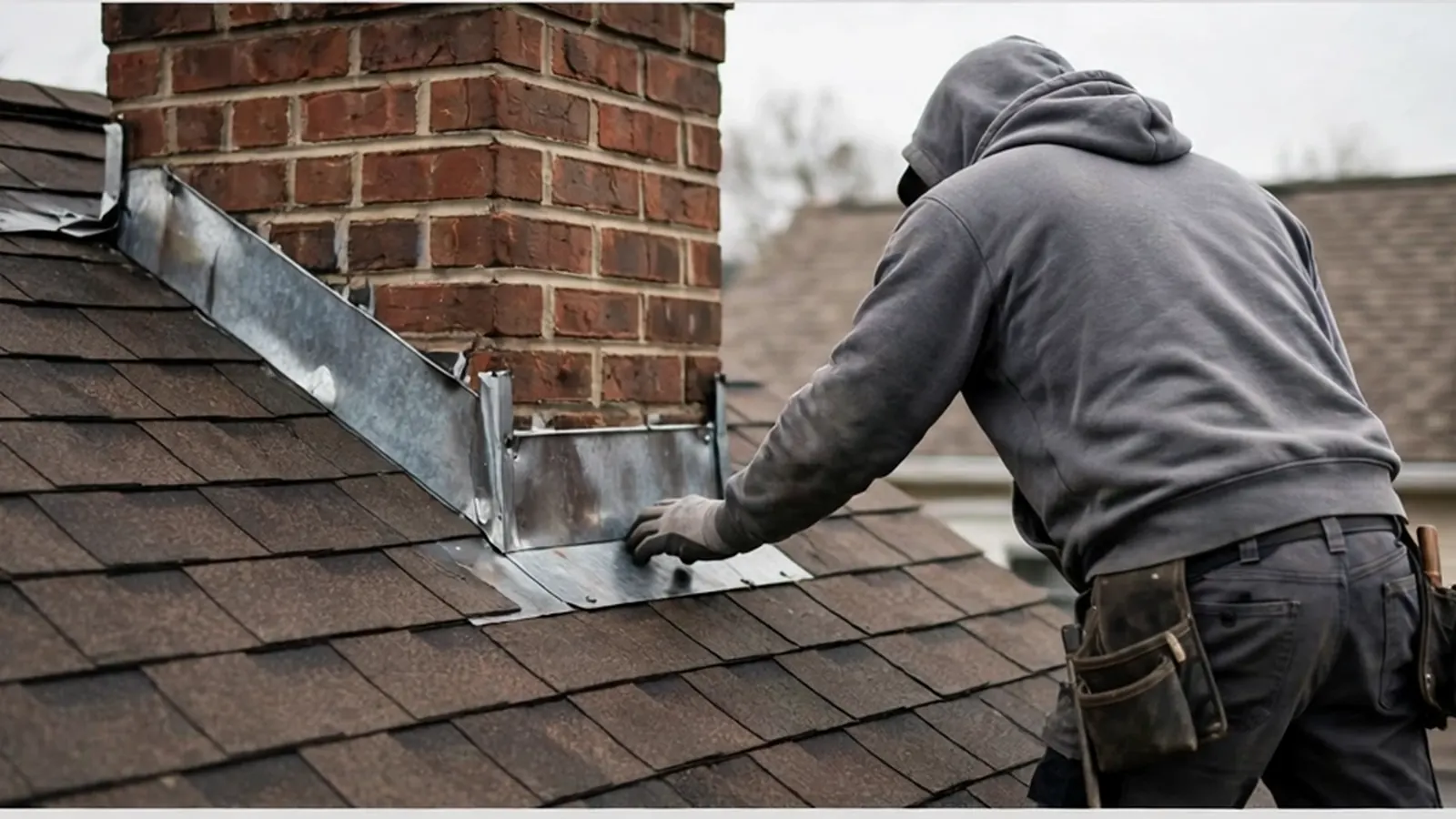
Flashing that has outlived its seal
More Columbus leaks are born at flashing than in open field shingles. The metal at chimneys, walls, and valleys depends on sealant and fit, and both age faster than the shingles around them, especially where freeze and thaw pry at the seams season after season. Flashing trouble usually presents as a slow, loyal leak: the same corner, the same kind of rain, year after year.
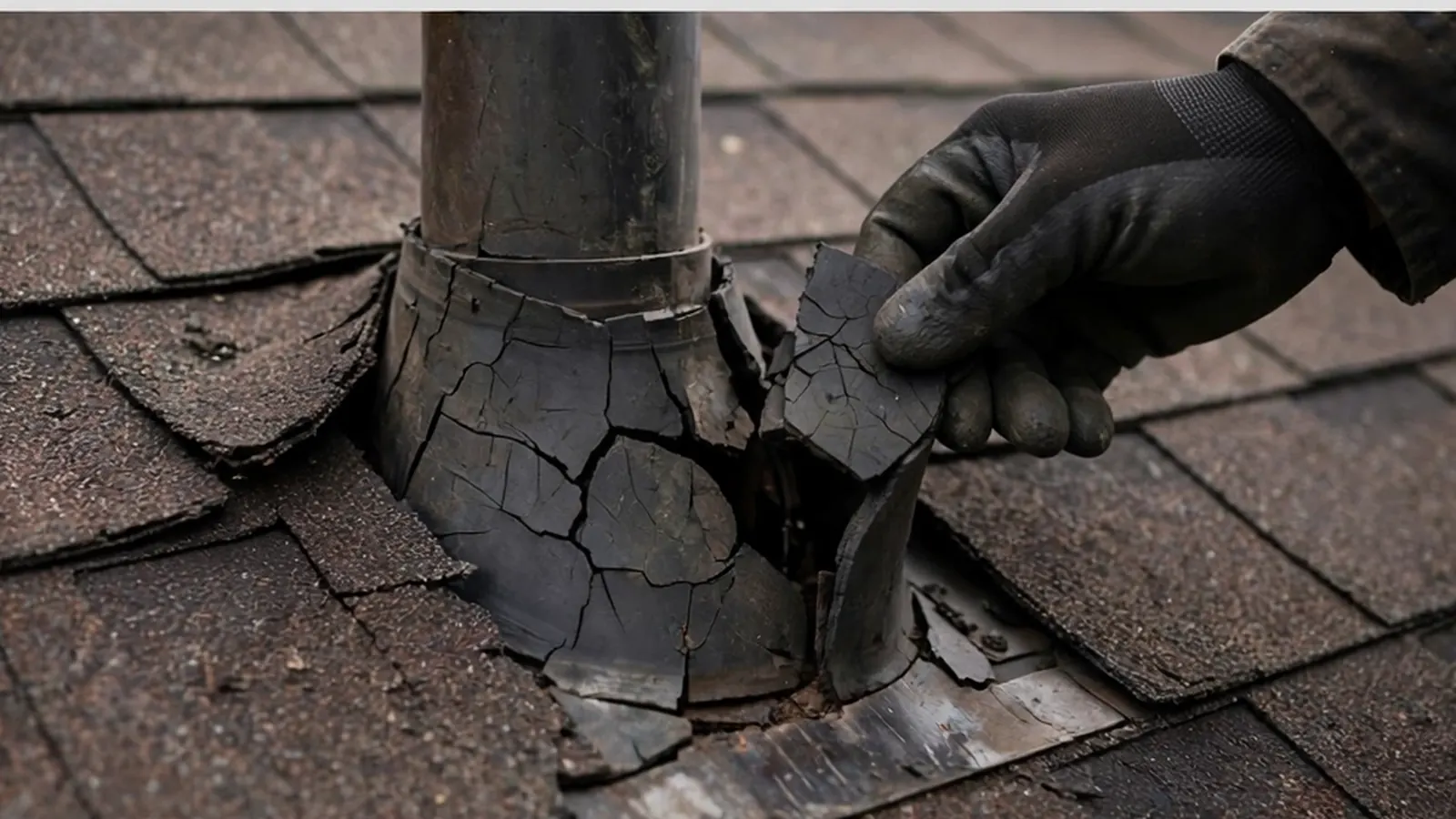
Vent boots and pipe collars gone brittle
The rubber collar around a plumbing vent is a small part with a short life. Ohio sun and winter cold crack it in a ring, and water follows the pipe straight down into the house, often landing in a bathroom ceiling where it gets blamed on plumbing. It is one of the cheapest genuine leaks to fix and one of the most misdiagnosed.
Storm bruising with no hole to show
Hail does not have to puncture a shingle to shorten its life. It bruises the mat and knocks granules loose, and the damage reads as accelerated age, not as a wound. From the ground, nothing looks wrong. At arm's length, with a hand on the shingle, the story is plain. This is why storm repair here starts with an inspection and a traced account, not with a conclusion.
Ice dam damage along the eaves
When a warm attic melts snow that refreezes at the cold roof edge, the ice ridge that forms can back meltwater up under the first courses of shingles. The leak appears at the outside wall, in the coldest week of the year, and then vanishes in spring, which tempts everyone to forget it was there. Ask what the eave and the attic insulation are doing, because the icicle is the symptom, not the disease.
What roof repair typically runs in Columbus
Use this table to budget. It is not a quote, and it cannot see your roof from here. These are planning numbers, drawn from published Columbus cost guides checked in November 2026. Your price comes after the inspection, and the findings that set it are yours to read before you decide anything.
| Repair | Typical range | Notes |
|---|---|---|
| Minor shingle repair | $300 to $650 | A few courses, one slope |
| Leak tracing and repair | $360 to $1,550 | Wider when the entry point is elusive |
| Flashing repair | $350 to $1,100 | Chimney, wall, and valley work |
| Emergency tarp after a storm | $375 to $950 | Buys time for a dry repair window |
| Most roof repairs | $300 to $1,600 | Columbus guides cluster here |
Why the ranges are wide: Columbus hangs everything from a low, walkable ranch roof in Whitehall to a steep pre-war roof in German Village, and a repair is priced by access, pitch, and what the water has reached. A suspiciously cheap leak quote has usually priced the stain, not the search. Ask where the water is getting in, and do not accept the stain for an answer.
Think of the roof as a system that sheds water in layers
Ryan learned repair work from a man who started roofing in 1980, and the lesson that survived the generational handover is this one: a roof is not a surface, it is a sequence. Shingles shed most of the water. Underlayment catches what gets past. Flashing hands water from one material to another at every chimney, wall, vent, and valley. Ventilation above the attic keeps the whole assembly from cooking in July or growing an ice dam in January. Most leaks are a handoff failing somewhere in that sequence, which is why the first question on our calls is never "what part," it is "when does it leak." A leak in a wind-driven rain points at different suspects than a leak in a steady soak or a thaw, and describing the pattern is the fastest way to a straight diagnosis, whoever you hire.
Why this crew, for this job
The traced path comes before the price talk
You hear where the water got in and how it traveled before anyone discusses what fixing it costs. Keep that order with every company you call; it changes what can be sold to you and what cannot.
Repair is the family business, literally
Olentangy exists because a founder in 1990 decided small repairs were worth doing well and a successor in 2016 decided to keep it that way. A leak is not an audition for a replacement sale here; it is the main line of work.
Evidence, not recollection
Ask what was found and what was done, with dates, whoever does the work. The second leak, the storm check two years later, and the eventual replacement conversation all go better from evidence instead of recollection.
The attic gets a say
Stains lie and attics testify. Ask whoever inspects your roof what the underside showed: daylight at a seam, stained decking, a wet trail running down a rafter. A diagnosis that never looked from below is half a diagnosis.
How a repair call goes
- You describe the water. Call Call for same-day help or send the estimate form: where it shows, when it shows, and what the weather was doing. Tessa books the window.
- The roof gets read as a system. Slopes, flashing, vents, and the attic side together, because the stain is rarely under the hole. (Hold every company you call to this, us included.)
- You hear the traced path, then the price. Findings first, number second. Say yes, cut it back, or pass.
- Ask for it in writing. The findings and the date, on paper, so the next conversation starts from evidence instead of recollection.
Columbus roofs, and how they age
The repair picture changes street by street. Along the Olentangy corridor and in the northwest suburbs, the late 1990s build-outs are hitting the age where boots crack, flashing sealant gives up, and the first leaks arrive in clusters: neighbors comparing notes at the mailbox because their roofs were installed the same summer. In the pre-war core, the work is steeper and older: layered flashing history at every chimney and walls that have met three roofs. Around the University District, fast budget roofs age on a shorter clock and leak younger than their years. Add the county's freeze and thaw habit and its spring hail window, and you have the Columbus repair year: ice at the eaves in January, wind and hail questions in May, tired sealant discovered by the October rains. Local detail for each town is on the service areas page.
Repair questions
Can I just seal the leak from inside the attic?
Homeowners ask this every winter, and the honest answer is that attic-side patches rarely hold, because the water's entry point is outside, upslope, and usually still open. Sealing where water exits treats the last inch of its journey. If a temporary inside measure buys a dry week, treat it as exactly that: temporary, with the real repair still owed.
The leak only happens in heavy rain. Does that mean it is small?
It means it is directional. Wind-driven rain finds lifted tabs, open seams, and flashing gaps that a gentle rain never reaches. A leak with a weather pattern is actually good news for the diagnosis: the pattern is a clue about which detail is failing, so describe it carefully when you call.
Is a tarp a repair?
No, and anyone who prices it as one deserves a hard question. A tarp is a pause button: it keeps new water out while a proper repair waits for dry weather or materials. In Columbus guides, a storm tarp typically runs $375 to $950, and the repair itself is a separate conversation with its own findings and price.
How long will a repair last?
It depends on what the repair is standing on. A flashing repair on a sound twelve year old roof can serve for years. The same repair on a roof whose granules are washing into the gutters is a bridge to a replacement conversation, and you deserve to hear which situation yours is, in those words, before you pay for the bridge.
What should I ask before I approve a leak repair?
Three things: where exactly is the water getting in, can you walk me through its path, and what is this repair not going to fix? A company that has found your leak can answer all three without pausing.
Water where it should not be? Call for same-day help or start with the free inspection. Most urgent leak calls get a same-day response, most days.